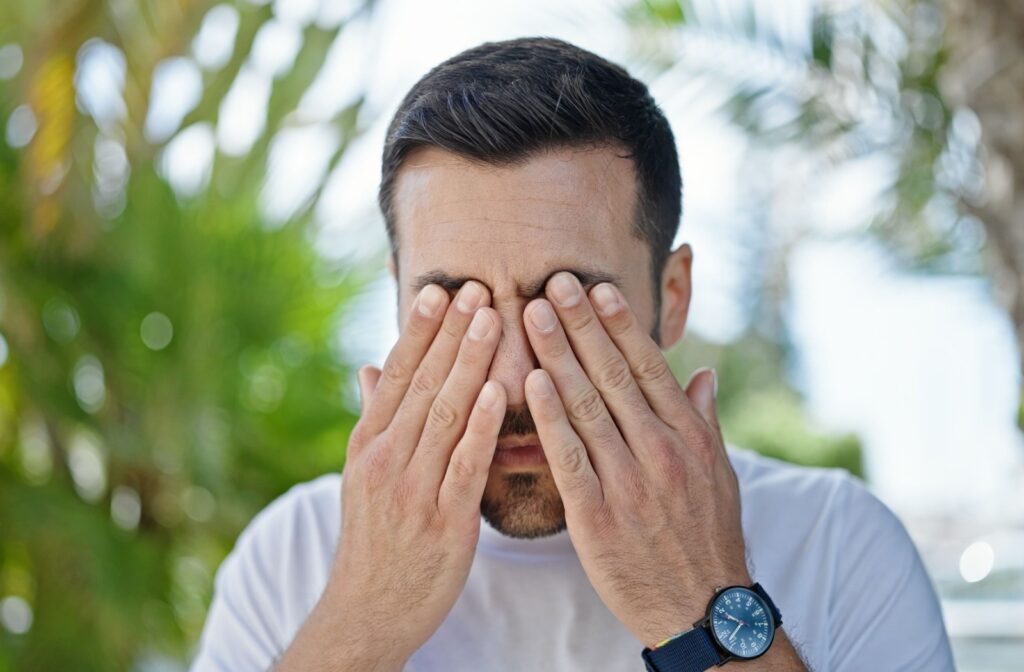
You rub your eyes after spending time outdoors, but instead of relief, they feel even drier and more irritated. What started as typical allergy symptoms somehow leaves your eyes feeling like sandpaper, making you wonder if there’s a connection you’re missing.
Yes, allergies can absolutely lead to dry eye by creating inflammation that disrupts your natural tear production and changes the quality of your tears. When your immune system reacts to allergens, it affects the delicate balance your eyes need to stay moist and comfortable. Our team at Mint Eyecare helps patients understand this connection and provides comprehensive treatment for both dry eye therapy and allergy-related eye symptoms.
How Allergies Trigger Dry Eye
Your eyes rely on a complex tear system that works like a well-oiled machine. When allergens like pollen or dust enter your eyes, your immune system releases chemicals called histamines to fight them off. This reaction creates inflammation around your eyes and tear glands.
The inflammation disrupts how your tear glands function, reducing the amount of tears you produce. Even worse, the tears you do make become less effective at keeping your eyes moist because their composition changes during allergic reactions.
Common allergens that can affect your eyes include tree pollen, grass pollen, dust mites, pet dander, and mould spores. Even indoor irritants like cleaning products or strong fragrances can trigger this dry eye response in sensitive people.
Signs Your Dry Eyes Come from Allergies
- Scratchy, watery eyes that turn dry
- Red, swollen eyelids
- Burning or gritty sensation
- Seasonal patterns in symptoms
- Other allergy symptoms, like sneezing or a runny nose
Allergy-Related Dry Eye vs Other Dry Eye Types
Seasonal Allergies and Your Eyes
Spring and fall often bring the worst symptoms because tree pollen peaks in spring while ragweed dominates fall. You might notice your dry eye gets worse during these times, then improve during winter when most outdoor allergens go dormant.
Indoor allergens like dust mites and pet dander can lead to year-round symptoms. Your dry eye might feel consistent rather than seasonal if these are your main triggers.
When It’s Not Allergies
Age-related dry eye happens because your tear production naturally decreases over time. These symptoms stay consistent year-round and don’t improve when allergy season ends.
Spending hours looking at screens reduces how often you blink, which can lead to dry eye. Medical conditions like diabetes or autoimmune diseases can also lead to persistent dryness that doesn’t follow seasonal patterns.
Treatment Options That Can Help
Allergy Management for Eye Relief
Antihistamine eye drops provide targeted relief by blocking the chemicals that react to allergens in your eyes. Another option is Hylo-Dual® eye drops, which are available at Mint Eyecare. Hylo-Dual contains an ingredient called ectoine, a natural cell-protective molecule that helps stabilize the surface of the eye and protect it from allergens and environmental irritants. Instead of acting like a traditional antihistamine, ectoine works by creating a protective barrier on the eye’s surface, helping to calm inflammation and support the tear film. This makes it a helpful option for people experiencing both allergy symptoms and dry eye.
Oral allergy medications can help reduce overall inflammation, which often improves your dry eye symptoms too.
Identifying and avoiding your specific allergens makes the biggest difference. Keep windows closed during high pollen days, wash bedding in hot water weekly to reduce dust mites, and consider replacing carpet with hard flooring.
Dry Eye Treatments
Preservative-free artificial tears can supplement your natural tear production without adding additional irritation. You can use these drops as often as needed throughout the day.
Professional treatments, including prescription medications and specialized procedures, can help manage severe cases that don’t respond to over-the-counter options. Mint Eyecare offers a range of dry eye therapies—such as heated eye masks, eye drops, and medicated eyelid wipes—available for purchase to help target the root cause of your symptoms.

When to See an Eye Doctor
Home treatments should provide some relief within a few days—if they don’t, you may need professional evaluation.
Contact an optometrist in Brampton if you experience vision changes, severe discomfort, or discharge along with your dry eye. These signs can indicate complications that need immediate attention.
Getting a proper diagnosis helps you understand whether allergies, other conditions, or a combination of factors contribute to your dry eye. Your eye doctor can create a treatment plan that addresses your specific situation.
These simple steps can significantly reduce how often you experience allergy-related dry eye. Consistency with prevention measures often works better than trying to treat symptoms after they start.
Find Relief Today
If you’re struggling with persistent dry eye that might be allergy-related, our team at Mint Eyecare can help you find the right solution. Contact us to schedule your comprehensive eye exam and explore our dry eye treatments for lasting relief.