
Key Takeaways
- Dry eye happens when your tear film is unbalanced.
- Liquid drops suit daytime use, gels last longer, and ointments are often used before bed.
- We recommend preservative-free eye drops, as they are gentler on the eyes and better suited for regular use.
- Redness-relief drops can lead to rebound redness.
- Contact lens wearers should look for drops labelled safe for contact lens wear.
- An eye exam can pinpoint what’s behind your dryness.
- You can purchase drops, warm compresses, and lid wipes recommended by our team at Mint Eyecare.
Dry Eyes Deserve the Right Approach
You blink, and for a second things feel fine. Then the sandpaper feeling creeps back, usually somewhere around hour three of scrolling, driving, or staring at a spreadsheet. Many of our patients at Mint Eyecare come to us with concerns about these kinds of symptoms.
The eye drops you use should be designed for the reason your eyes feel dry, so look at the type, the ingredients, and whether the drops are preservative-free before you reach for a bottle.
Why Your Eyes Feel Dry in the First Place
Dry eye shows up when your tear film becomes unbalanced. Long stretches of screen time, contact lens wear, dry indoor air, and certain medications can all contribute. Age and hormonal shifts play a role too, which is why the dryness you notice at 45 might feel different from what you shrugged off at 25.
If your symptoms are persistent, dry eye therapy can sort out which of these factors are contributing to your discomfort.
Signs Worth a Closer Look
The following are all common symptoms of dry eye:
- Stinging, burning, or a gritty feeling
- Redness or blurry vision
- Watery eyes
- Strings of mucus in or around your eyes
Types of Dry Eye Drops & What They Do
Walk down the eye care aisle and you’ll see the three basic choices. Liquid drops are the thinnest and work well during the day because they don’t cloud your vision. Gels are thicker and hang around longer, though they can blur your vision for a few minutes after you use them. Ointments are the thickest of the group, so many people save them for right before bed. Many people end up using more than one—a liquid drop for the workday and something thicker overnight—and our team can help you build that combination from the products we carry in-clinic. If screens are part of the picture, pairing drops with a plan for digital eye strain often helps more than drops alone.
Ingredients on the Label
Oil-based drops help when your tears evaporate too quickly, while drops with electrolytes help support a healthy tear film. Thinner, watery drops simply add volume to the tears you already have. Reading the label takes ten seconds and can save you from buying the wrong bottle. If the ingredient list still reads like a chemistry test, bring it to us—our optometrist staff can compare it against the drops we stock and tell you what’s actually different between two bottles.
Preserved Versus Preservative-Free Drops
Preserved eye drops can cause irritation or allergies when used over long periods of time. For this reason, we actively recommend switching patients from preserved drops to preservative-free options, which are gentler on the eyes and better suited for ongoing use.
Preservative-free drops skip the extra additives, so they tend to feel gentler when you’re using drops all day. If you’re putting drops in 4 or more times daily, reach for preservative-free.
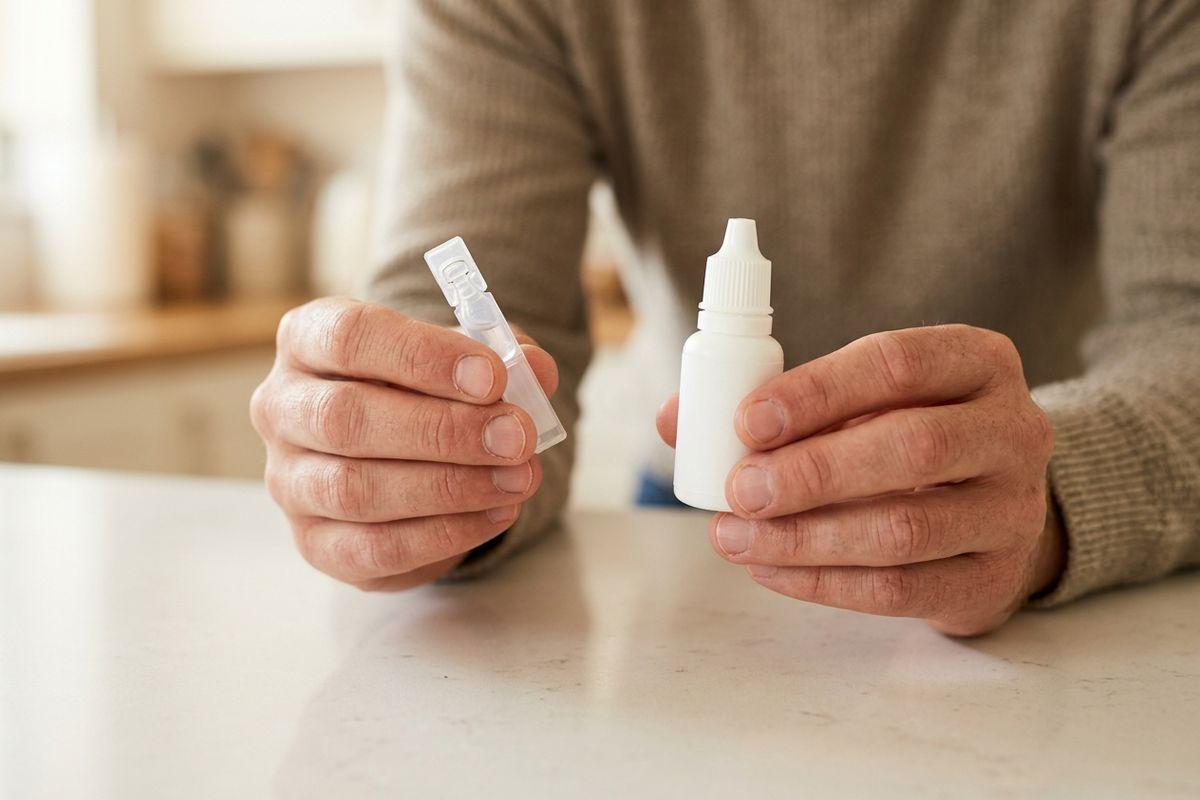
Single-Dose Vials or Multi-Dose Bottles
Vials are easy to toss in a bag or a car console, though they cost more per dose. Bottles create less plastic waste and stretch your budget further. Both can be effective, so pick the one you’ll actually keep with you.
Drops to Skip and Safe Use Tips
Redness-relief drops can lead to rebound redness, meaning your eyes may look redder once the drops wear off. If your goal is comfort rather than a quick cosmetic fix, it’s better to leave these drops on the shelf.
Check for recalls before you buy, and skip anything past its expiry date. Here’s what happens if you use expired eye drops.
Before applying drops, wash your hands first, and keep the tip of the bottle from touching your eye, your fingers, or the counter.
More Than Just Drops
Drops are often only part of the routine. If clogged oil glands are behind your symptoms, a warm compress can help loosen things up, and medicated eyelid wipes clear away the debris and bacteria that leave lids flaky and irritated. We carry both alongside our drops, so you can leave your appointment with the full routine rather than a list to hunt down later.
What About Contact Lenses
If you wear contacts, look for drops labelled safe for contact lens wear. If a bottle doesn’t specify this information, remove your lenses, use the drops, wait a few minutes, then put your lenses back in. Good contact lens care habits go a long way toward keeping your eyes comfortable, so if you have persistent discomfort, our team can perform a contact lens exam and fitting to help you find a more comfortable pair. Sometimes the fix is the lens itself—a different material, a different replacement schedule, or a switch to daily disposables. Once we’ve found the right fit, you can reorder your lenses through our online contact lens store and have them shipped straight to you.
How Our Team Can Help You Choose
Guessing at the pharmacy gets expensive. An eye exam can pinpoint what’s behind your dryness, so that our eye doctors in Brampton can recommend the right dry eye treatment options.
You can shop clinic-recommended drops in our optical gallery, with staff on hand to help you compare options.
When to Book with a Brampton Optometrist
Consider booking if you’re using drops more than three times a day, or if your symptoms stick around, get worse, or start affecting your vision.
Our team at Mint Eyecare would love to help you find lasting relief. Contact your Brampton optometrist to book your appointment and pick up dry eye drops suited to your eyes.